
Young Indian Artist Preserves Proud Culture
The art of Don Secondine is displayed on this magazine clipping. We have the original clipping as well as a black and white copy.
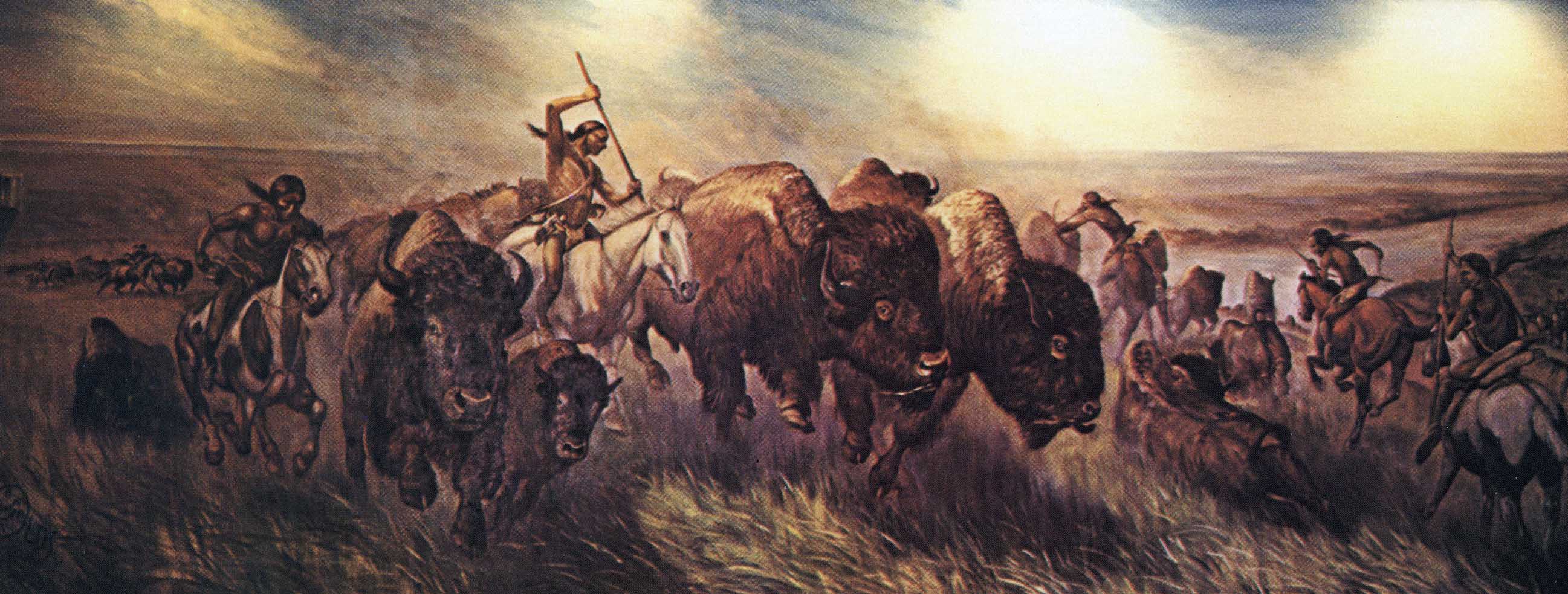

The art of Don Secondine is displayed on this magazine clipping. We have the original clipping as well as a black and white copy.
The article outlines different styles of dance that Don Secondine paints and the way the dancers move and look. It also outlines Secondine's family and his journey with art. Indian past and Christianity are also discussed towards the end of the article. There are also …
We have the original newspaper clipping as well as a printed copy. The article outlines the removal of Indians from their homes into reservations and the "civilizing" of them. It outlines the lives that the "Five Civilized Tribes" led. There is also an illustration of …
We have the original newspaper clipping as well as a printed copy. Pictured is two horses pulling a wagon with two people in it on a Navajo reservation.
We have the original newspaper clipping as well as a printed copy. This article outlines how land was allotted to the Indians. Maps are also presented in the article of Oklahoma and South Dakota to show where the tribes were located.
Pictured in black and white is the Cherokee Capital in 1906. Many uniformed people stand at the front of it. This is a piece of a newspaper clipping in the following entry.
We have the original newspaper clipping as well as a printed copy. This article outlines the education needs of Indian children due to handicaps.
This article outlines the concept of blood degrees in relation to land allotment and the way that the Dawes Commission was met with resistance.
This article outlines how the Cherokee lands were stolen and details about the camp utilized by the Five Civilized Tribes. It also talks about the Trail of Tears marker in Lavaca.
This article outlines how the Dawes Roll was detrimental to the Cherokee identity.
We have the original newspaper clipping as well as a printed copy. This article outlines the Cherokee Nation recieving new membership cards and rules for using the new cards.
We have the original newspaper clipping as well as a printed copy. This article outlines how members of A.I.M. took 11 hostages and Ralph Erickson describes his plan for safe release of the hostages. The Indians were demanding a senate investigation of the BIA and …
This seems to be a continuation of the article in 3.5: Arkansas man details Cherokee removal to Indian Territory because it talks about the Trail of Tears marker and memorial and more details on why it was placed where it was.
We have the original newspaper clipping as well as a printed copy. This article outlines the Indians' frustration with the Bureau of Indian Affairs.
We have the original newspaper clipping as well as a printed copy. This article outlines the removal of 17k Cherokee Indians and what resulted in the Trail of Tears. The festivities of the day included efforts to spread awareness about what happened to them and …
We have the original newspaper clipping as well as a printed copy. This article talks about Emerson Paddock, or Little Wolf, and his life and the way that he died. Pictured is the cemetary in which he was buried as well as a picture taken …
We have the original newspaper clipping as well as a printed copy. This article outlines the event of Mayor Garcia of Gallup being abducted, held at gunpoint, and shot. Pictured is the mayor and one of his abductors, Larry Casuse. The other abductor was Bob …
We have the original newspaper clipping as well as a printed copy. Pictured is a comic about how mothers care for their babies. Followed by the comic is a question and answer about Indian mothers tying their babies to boards and the reasoning behind it.
We have the original newspaper clipping as well as a printed copy. This article outlines the work of Edward S. Curtis for his documentation of the North American Indian by spending 30 years taking over 40K glass-plate photographs. The end of the article also highlights …
We have the original newspaper clipping as well as a printed copy. This article outlines the way that Native Americans are portrayed in public school textbooks and what is being done to change that. The picture included displays the Tribal Panel of educators and lists …
We have the original newspaper clipping as well as a printed copy. This article outlines an agreement made over the 37-day seige at Wounded Knee. Pictured is Russell Means and others signing a settlement at Wounded Knee.
We have the original newspaper clipping as well as a printed copy. This article outlines the outcome of the agreement signed at Wounded Knee as well as the vacating of the Indians from the hamlet.
We have the original newspaper clipping as well as a printed copy. This article outlines the event of 200 armed Indians holding hostages while demanding that there will be three separate Senate committee investigations and the removal of tribal officials. Also pictured is the U.S. …
We have the original newspaper clipping as well as a printed copy. This article outlines a battle in which the Native Americans were fully armed and had plans to negotiate their demands with the white man.
We have the original newspaper clipping as well as a printed copy. This clipping has two articles on it. The first outlines water activities that occur on the river. The second summarizes a center in which the Cherokee people have their culture preserved through a …

Advanced search techniques for better results
Soccer Queens - Finds Soccer OR Queens (default)Soccer AND Queens - Must contain both words"Soccer Queens" - Exact phrase match (use quotes)+Soccer -Queens - Has Soccer, excludes QueensEnable the "Use Regex" checkbox for pattern-based searches:
^Smith - Names starting with "Smith"Smith$ - Names ending with "Smith"John|Jane - Finds either "John" or "Jane"💡 Tip: Start with simple searches. Use boolean operators for precise results, regex for advanced pattern matching.
Requesting copy for: