
Comanche War Party
Painting of the Comanche war party meeting the Dragoons under Col. Henry Dodge in 1834. Painted by George Catlin

Painting of the Comanche war party meeting the Dragoons under Col. Henry Dodge in 1834. Painted by George Catlin
Photograph of The International Indian Council in session at Tahlequah in 1843.
Photograph of a school house at Dwight Mission
Photograph of an ancient fire-place in one of the buildings located at Fort Towson
Photograph of some parts of an old barrack building located at Fort Gibson. The Barracks were constructed in 1843.
Painting of Tunk aht oh ye, the Thunderer. He was a Kiowa boy held captive by the Osage Indians, purchased by General Henry Leavenworth to return him to his tribe. Ended up being killed by a ram in the bank of the Verdigris River.
Photograph of some of the ruins at Fort Washita.
Photograph of a relic located in Fort Arbuckle.
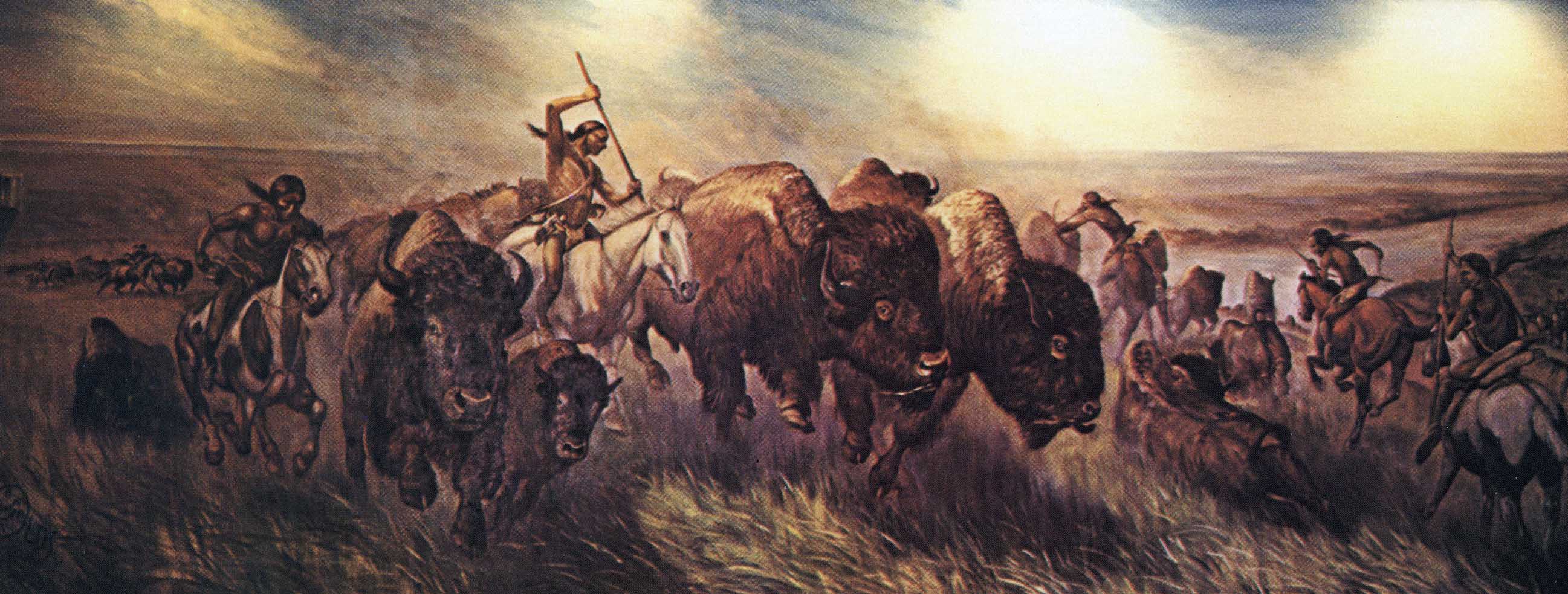
Drawing of Prairie Indians hunting buffalo
Painting of Wee ta ra sha by George Catlin. Wee ta ra sha was a Wichita chief who participated in the council at Fort Gibson in September, 1843.
Wichita village on Rush Creek. From the "Exploration of Red River" by Captain R.B. Marcy
U.S. Government seeks to evict the Yellow Thunder Camp from the Black Hills of South Dakota.
A Navajo Indian ritual, involving the flesh of the desert cactus Peyote being placed in a glass jar to be eaten, takes place.
Tapestry of the Twelve Tribes of Israel to be displayed.
Material describing the process of making a Cherokee Tear Dress and leather shoes.
Article by Mary HorseChief-Henderson using excerpts from the book " The Southern Indians" to bring a better understanding on the process of Cherokee Courtships and Weddings.
An excerpt from a book describing the traditional Cherokee Marriage Ceremony.
An excerpt from a book describing the history and make of the Cherokee Tear Dress and Ribbon Shirt
A brochure for the George M. Murrell home site describing the site itself on the front with the location and listing hours and events on the back.
Artwork by Robert H. Annesley titled "Spirt of the Smokies" depicting the feeling of a dispersed Cherokee man.
A Magazine Article describing the Cheynne traditional garments worn.
Newpaper article about the Cheyenne Tribe along with their history and the origins of their morning star emblem. The piece also talks about their Trible headquarters ( Lame Deer ), their langue ( Wohehiv), their Pow-wows, campgrounds, Two Moons Monument, and Bighorn Rosebud Creek Battlefield.
A clipping advertising the attractions of Ashland.
A Ranger special edition newspaper dedicated to the event and history of Pow Wow.
Clipping on the Wind River Indian reservation and its people.

Advanced search techniques for better results
Soccer Queens - Finds Soccer OR Queens (default)Soccer AND Queens - Must contain both words"Soccer Queens" - Exact phrase match (use quotes)+Soccer -Queens - Has Soccer, excludes QueensEnable the "Use Regex" checkbox for pattern-based searches:
^Smith - Names starting with "Smith"Smith$ - Names ending with "Smith"John|Jane - Finds either "John" or "Jane"💡 Tip: Start with simple searches. Use boolean operators for precise results, regex for advanced pattern matching.
Requesting copy for: