Mini-Document Essay
Students
enrolled in English 1102 classes taught by VSU Instructor Diane W. Howard
during spring 2004 semester, read “Going Through the
Change,” Janice Daugharty’s first collection of short
stories. After reading the collection, the
students explored topics in the stories, relating them to their hometowns or
communities. Simply put, the students related the ideas in a literary piece to
their own lives, finding points or areas of similarity as well as areas of
disagreement. Once they identified points—in agreement or in contrast—the
students researched and wrote a mini-documented essay on the subject “Regional
Identity.”
Growing Tobacco—South
Georgia Style
by Kathy Berger
For the past
twenty to thirty years, tobacco farming has been one of the leading agricultural crops in our region of Deep

 Janice
Daugharty’s article, “Write Where You Know” states, “Of course, most writers
are wise to the rule of writing about what you know. But where you know, a specific place, is
equally important” (“Write” 32). I can
relate to many of Daugharty’s characters and stories
since I am from
Janice
Daugharty’s article, “Write Where You Know” states, “Of course, most writers
are wise to the rule of writing about what you know. But where you know, a specific place, is
equally important” (“Write” 32). I can
relate to many of Daugharty’s characters and stories
since I am from
I was born and
raised on a farm in 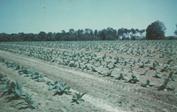 based
on growing and harvesting flue-cured tobacco.
In Georgia Agricultural Resources it states, “
based
on growing and harvesting flue-cured tobacco.
In Georgia Agricultural Resources it states, “ vegetables for our own food, to fill our
freezer and half of the families in
vegetables for our own food, to fill our
freezer and half of the families in  and
then serve dinner to everyone. After,
she would go back to the field and work until late in the evening; then, she
would go to pick vegetables. Moma would come
home, prepare the vegetables and cook them for supper. She would sleep for a couple of hours and get
up at
and
then serve dinner to everyone. After,
she would go back to the field and work until late in the evening; then, she
would go to pick vegetables. Moma would come
home, prepare the vegetables and cook them for supper. She would sleep for a couple of hours and get
up at  weren’t too many families in
 The
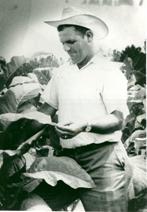
Junior Suggs family (my family) was the #1 leading tobacco farmer, with Virgil
Moore being the 2nd, and Ben Strickland rated the 3rd. All families are from
The
Junior Suggs family (my family) was the #1 leading tobacco farmer, with Virgil
Moore being the 2nd, and Ben Strickland rated the 3rd. All families are from 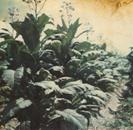 twine
to identify the types of the tobacco.
Also, different types of chemicals or pesticides and fertilizer were
used for this experimental tobacco” (Suggs, L.). “The government official Bobby Miles from the
Tobacco Experimental Station in
twine
to identify the types of the tobacco.
Also, different types of chemicals or pesticides and fertilizer were
used for this experimental tobacco” (Suggs, L.). “The government official Bobby Miles from the
Tobacco Experimental Station in  said Daddy.
Moma stated, “The pictures were placed on front page in
said Daddy.
Moma stated, “The pictures were placed on front page in 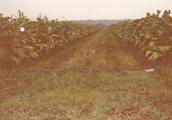 all
local newspapers. Also, the experimental
tobacco crop was carefully watched by John Strickland, the Lanier County Agent”
(Suggs, L.). All of these officials
carefully watch the
all
local newspapers. Also, the experimental
tobacco crop was carefully watched by John Strickland, the Lanier County Agent”
(Suggs, L.). All of these officials
carefully watch the  whole process of growing the experimental
tobacco which are planting, all stages of growth, harvesting, flue-curing, and
selling the tobacco to the highest bidder at Roy Pearce’s Tobacco Warehouse in
whole process of growing the experimental
tobacco which are planting, all stages of growth, harvesting, flue-curing, and
selling the tobacco to the highest bidder at Roy Pearce’s Tobacco Warehouse in
This one
particular story written by Daugharty, “Dogs
in a Pack” reminds me of when I use to go to the tobacco warehouse
auctions, she wrote, “Set top of many asheet of tobaccer for their daddy, to get the buyers out of Carolina
to hike up the price at the warehouse” (7).
On an internet site listed by the ERS/USDA Briefing Room, an article
called “Tobacco: Background” states,
“In 1997, flue-cured tobacco was grown on about 16,000 farms in North Carolina,
Virginia, South Carolina, Georgia, Florida, and Alabama. Farmers in these States grew an average of
30.0 acres of tobacco, up from 9.5 acres in 1972. Farm sizes have expanded as harvest has
become more mechanized” (“Tobacco: Background”). Tobacco is still a well-known crop for many
farmers in

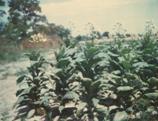

 After reading many stories in Janice Daugharty’s book,
Going Through the Change, my mind
started wandering back in time. This
book helped me to remember so many details of how my family grew tobacco. At age 5 in the year of 1967, I was
too little to crop or string tobacco on the harvester and not quite strong
enough to drive the tractor pulling the harvester. So, I would sleep on a metal piece which
covered the wheels on the harvester while my Moma and others worked in the
early morning hours. This harvester
needed nine people to operate it. We had
someone driving the tractor pulling the harvester down the tobacco rows. Usually, it was my brother,
After reading many stories in Janice Daugharty’s book,
Going Through the Change, my mind
started wandering back in time. This
book helped me to remember so many details of how my family grew tobacco. At age 5 in the year of 1967, I was
too little to crop or string tobacco on the harvester and not quite strong
enough to drive the tractor pulling the harvester. So, I would sleep on a metal piece which
covered the wheels on the harvester while my Moma and others worked in the
early morning hours. This harvester
needed nine people to operate it. We had
someone driving the tractor pulling the harvester down the tobacco rows. Usually, it was my brother,
My mind keeps drifting back remembering shortly after learning to string tobacco at the barn, I began stringing tobacco on the harvester. The older I became, the more I worked with each level of the process of growing tobacco. I had planted tobacco, re-transplanted, hoed the weeds, topped and suckered, walked behind the harvester picking up the ripened leaves left by the croppers. A handbook located on a website called “Topping and Chemical Sucker Control Programs for Georgia” written by Michael Moore from the University of Georgia College of Agricultural & Environmental Sciences states, “Benefits of topping and sucker control include; increased root growth, reduced weight in the top of the plant, a reduction of the translocation of nutrients and moisture from lower leaves to support the growth and development of upper leaves” (Moore). Topping and suckering tobacco was not a fun job; but, it had to be done. After I had finished with topping and suckering the tobacco, my hands, hair, arms, or whatever I had touched the tobacco were caked with tar. Also, to add to my accomplishments of tobacco farming, I cropped, strung, laid sticks on the trailer, drove the tractor, and hung tobacco on the tiers in the barn. When the tobacco was cured, I helped unstring, packed the tobacco in sheets and stacked it in our pack-house, and helped load the sheets which weighed about 250 lbs. each onto the 2-ton truck with tall side-bodies. Then, the tobacco was taken to the tobacco warehouse to sell. I reminisce when reading Daugharty’s “Dogs in a Pack”:
But neither is soft—they’ve helped their mama keep the farm going for the past five years and can lift sheets of tobacco that would make grown men stagger. [...] In the next room, against wainscoted walls, mounds of sheeted tobacco are stacked high, and golden dried leaves poke through the riven croker sheets, knotted on top. A snuffy smell seems to dim the overhead light showering yellow on bundles of thin tobacco sticks and the dirt nap of the floor tatted with tobacco leaves and rosettes of white twine. (6-7)
What memories! If I were lucky
enough, Daddy would let me pick up
the hands (workers) in the morning; then, take them home in the late
evening. On Saturday evening, I would
ride along with one of my brothers to help pay the hands for that week’s work. That’s the way it was done in our “neck of
the woods.” If I were not working in the
fields, sometimes I could go to Roy Pearce’s Tobacco Warehouse in
My mind meanders
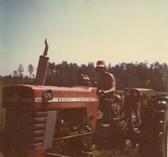
back to the summer of 1976 and the way the Suggs family harvested tobacco had
changed. We were one of the first
farmers in the
After more than 30 years, in 1979 we stopped farming tobacco because Daddy no longer had his eight children to help him grow tobacco. All of my brothers and my older sister were married and had started their own families. My sister move away from this area. My brothers started their own tobacco crop or did construction work, in which all of them owns a construction business to this day. I have not stepped foot in a tobacco field since! Although, it was really nice to reminisce of how tobacco farming was done “back in those days.”
My knowledge of tobacco farming compared to the characters from Janice Daugharty’s book, “Going Through the Change” are very much the same. However, I do wish that Mrs. Daugharty had put more emphasis on the tobacco farming in her stories. Absolutely, I can relate to the characters Daugharty used in her stories because I was born and raised on a farm also. The smell of the flue-cured tobacco—it is a smell I will never forget. Actually, I did like the smell of cured tobacco. Janice Daugharty wrote about the sheets of tobacco stacked in a pack-house, the smell of curing tobacco in barns, taking the tobacco to the market to be sold and the families physically helped with all of the process. In the story “Dogs in a Pack” Daugharty writes, “The smell of dry tobacco, cooking in the barn beyond the oak, scuds high in the star-spun sky” (11). Most definitely, I have experienced all of this. Daugharty even writes about the smoking or chewing of tobacco in her stories. In the her story “Living Lessons” she writes, “He takes out the tobaccer can from his shirt pocket and shakes a dab in a cuffed paper, spits, licks and rolls it. He strikes a match [...] He sucks in and rears back, shaking out the fire” (198). However, before tobacco is available for smoking or dipping, it has to be first grown in the field like the Suggs family’s crop in Lanier, Lowndes, and Clinch counties that are located in the heart of Deep South Georgia.
 Harvesting
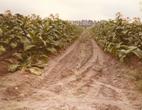
tobacco has changed enormously from 20-30 years ago. Currently, there is a harvester that requires
only one person to operate it. It does
all of the work for the farmer. The old
fashion way of harvesting tobacco was very hard work. Some people may not agree with me when I say,
that this new type of harvester seems to take the original identity out of
farming tobacco.
Harvesting
tobacco has changed enormously from 20-30 years ago. Currently, there is a harvester that requires
only one person to operate it. It does
all of the work for the farmer. The old
fashion way of harvesting tobacco was very hard work. Some people may not agree with me when I say,
that this new type of harvester seems to take the original identity out of
farming tobacco.
 Janice Daugharty’s book, Going Through the Change has taken my
thoughts, mind, and heart back to a time of my own regional identity. These past memories of being raised on a farm
and growing tobacco, I haven’t thought about in many years. My past experiences of tobacco compared to
some of the characters portrayed in Daugharty’s book are very much the one and
the same. Absolutely, I can relate to
Growing Tobacco—South Georgia Style.
Janice Daugharty’s book, Going Through the Change has taken my
thoughts, mind, and heart back to a time of my own regional identity. These past memories of being raised on a farm
and growing tobacco, I haven’t thought about in many years. My past experiences of tobacco compared to
some of the characters portrayed in Daugharty’s book are very much the one and
the same. Absolutely, I can relate to
Growing Tobacco—South Georgia Style.
Works Cited
Daugharty,
Janice. “Dogs in a Pack.” Going
Through the Change.
Daugharty,
Janice. “Living Lessons.” Going
Through the Change.
Daugharty,
Janice. “Nightshade.” Going
Through the Change.
Daugharty, Janice. “Write Where You Know.” Writer’s Digest. May 1997. 32.
Suggs, Bryan. Personal interview. 10 Apr. 2004.
Suggs,
Junior. Personal interview.
Suggs,
Lola. Personal interview.
“Tobacco.”
“Tobacco:
Background.” ERS/USDA Briefing Room.
Illustrations
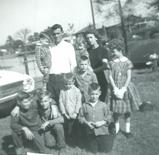
Figure #1.
Suggs Family.
Figure #2. Suggs’ Tobacco Farm.
Figure #3. Suggs, Lola. Home Place. 1961.
Figure #4. Suggs, Junior. Experimental
Tobacco #2326.
Figure #5. Suggs’ Experimental Tobacco #2326. Summer 1974.
Figure #6. Suggs’ Tobacco Farm.
Figure #7. Suggs, Mike. Tractor. Summer 1976.
Figure #8. Suggs’ Tobacco Farm.
Figure #9. Suggs’ Tobacco Farm.