
Te Ata Contd.
The story of Te Ata from being a young girl, who loved to read the bible, to a performer, to being a dancer, a student, a wife, and a storyteller.

The story of Te Ata from being a young girl, who loved to read the bible, to a performer, to being a dancer, a student, a wife, and a storyteller.
A colored photograph of kids walking down a snowy road dragging a sled. Above the photo, it describes a blanket of snow as a fresh coat of paint. The picture that is painted is the winter side of Oklahoma. This particular photo was taken in …
Bert Seabourn was a Cherokee artist who worked for Oklahoma Today. He was inspired by comics and always wanted to be a cartoonist. He improved his skills when he was in the U.S. Navy his job was to work in the Public Information Office as …
Bert did mini cartoons and features for the Navy, he was following his dream of becoming a cartoonist. When he was in school there was no art class and he didn't receive any training. He moved to Oklahoma City to get an education in art. …
Architectural drawing and descriptive history of the Historic Congressional Cemetary which was established in 1807. The cemetery is located at 1801 E. Street s.e. Washington, D.C. There are a few descriptions of popular gravesites located at the cemetery.
Description of the Native American tribes that are buried at the Congressional Cemetery. Some of the tribes include Apache, Cherokee, Chippewa, Choctaw, Creek, Kiowa, Nez Perce, Pawnee, Sac&Fox, Sioux, and Winnebago
A meeting where Indian tribes honor their tribesman is located at the Congressional Cemetery. There are various tours to choose from and below each tour is the timing, location, and what will be discussed.
Page taken out of an Indian Tribal Government book. This section acts as a guide for Federal Tax Reports. Some of the topics covered are private rulings, determination letters, requests for technical advice, public disclosure information, and financing Presidential election campaigns. It assigns a code …
The Cherokee Nation created the New Echota as a form of government for the Indian Nation. It was created on November 12.1825 and spread across northern Georgia into western North Carolina, eastern Tennesee, and northeastern Alabama. This new form of government was inspired by the …
The costs of the print shop and publishing of Indian newspapers were funded by the American Board of Commissioner for Foreign Missions. A missionary named Rev. Samuel Worcester was sent out and built a home near the capitol, it is now the Georgia Historical Commission. …
Three photos taken from a newspaper show wagons traveling from Tennesse to Westville, this travel was to honor the anniversary of the Trail of Tears.
Letter from the Cherokee Nation informing that the person needs to re-register to become a member of the tribe. To maintain up-to-date records the Nation will need a copy of your Certificate of Degree of Indian Blood (CDIB), and birth/ death certificates of an ancestor.
Worksheet on the Trail of Tears. Provides a brief description of the five civilized tribes, and how they were forcefully removed from their lands. Below the text are two sections of questions.
Describes how the Cherokee Indians were removed from their land by white settlers, the historic route was developed by the Department of Conservation. The route starts at Red Clay State historic area in Bradley County, near the Georgia border, and ends in Gurthle Kentucky.
Talks about how the Cherokee Nation was driven off their homeland, and 4,000 died of disease and hunger. Other tribes were also forced to leave their territory; Choctaw, Creek, Chickasaw, and the Seminole. There are tours, art shows, and more to bring attention to the …
Teaching guide on how to teach students about different tribes; such as the Apache, Cherokee, Cheyenne, Chippewa, Eskimo, Hopi Pueblo, Iroquois, Navaho, Seminole, Sioux, Tlingit, and even an adapted version for special education.
History behind how Stillwell was named after Arthur Edward Stiwell, who built the Kansa City Railways, and other various contributions to the economic growth of the central southern states. Mentions that the Trail of Tears was due to a bill passed in 1830 that removed …
Story of Adair County located in Oklahoma. It was made from two districts of the Old Cherokee Nation; Flint and going-snake. Western Cherokees voluntarrly left their territory to migrate west. A treaty gave let the Cherokee exchange their homes for 7 million acres of Indian …
Recalling the story of the Trail of Tears. How the Indians were unwilling to give up their land, and forced to relocate to Oklahoma. There will be commemorations for the 150th anniversary in conjunction with Indian Summer Day (ISD). Exhibits, live demonstrations, and tours will …
Mentions how the Indians faced hunger, death, sickness, and separation during their journey along the Trail of Tears. Most causes of death were due to exposure to various illnesses such as whooping cough, measles, dysentery, and pneumonia. Others were killed when trying to escape being …
Indians were forced to become "civilized", which led to Indians living in houses and how they dressed. They soon started to work in agriculture and owned plantations. On the plantations, there was a need for labor hands so the Cherokee bought more than 1,500 slaves. …
John Ehle not only was a writer but also helped create access to education and programs designed to help the less fortunate in North Carolina. He published 15 books. The book topics ranged from civil rights, civil war, and how to make cheese, wine, and …
John Ehle won various awards for his work. He has an eccentric personality and is notably known for his distinct laugh. He was divorced and remarried, later having a daughter with his second wife. He got his education from The University of North Carolina Chapel …
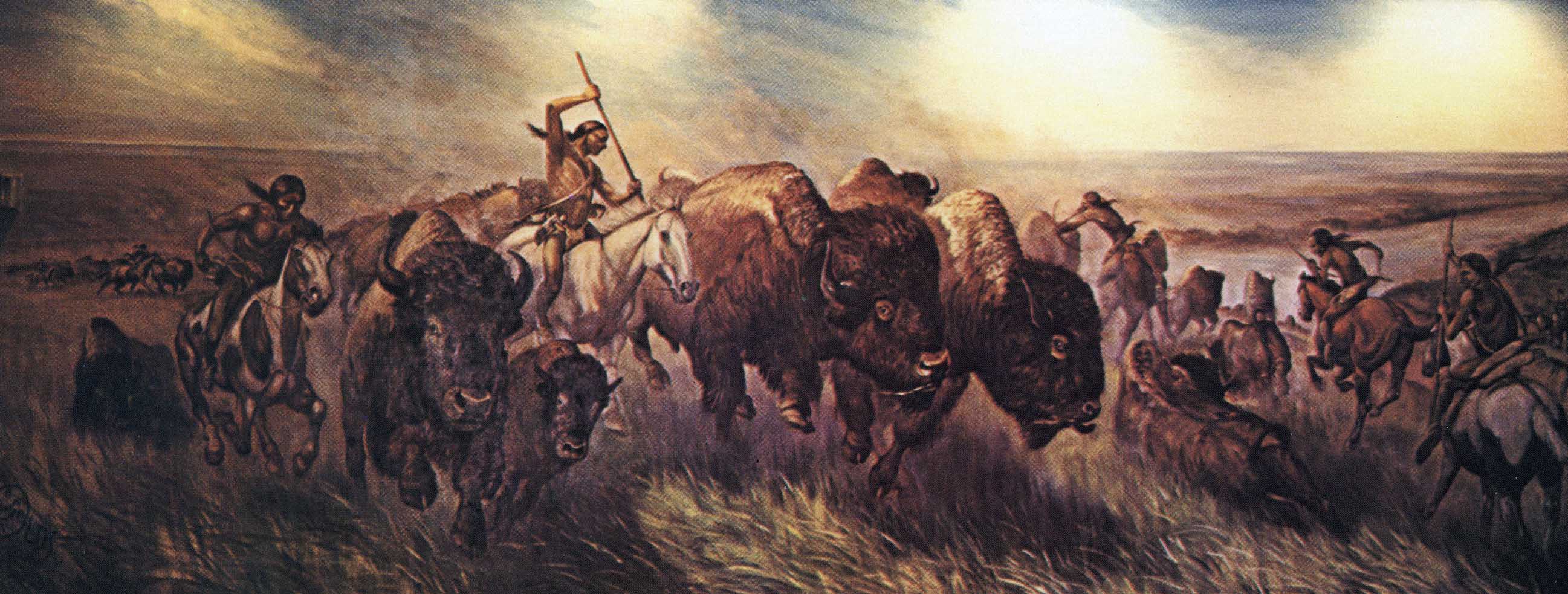
Gives information on buffalos; they don't see well, don't have a good sense of smell, and depend on one another. A cliff called Head-Smashed-In is located in Southwest Alberta. It was named after a lone Peigan Blackfoot who was crushed to death watching the buffalos …
Continuation of buffalo information. Buffalos were led by females into prairrie grasses located at Head-Smashed-In during the summer. Indian bands would follow and set up summer camps where marriages were arranged, goods were traded, and warriors maintained order.

Advanced search techniques for better results
Soccer Queens - Finds Soccer OR Queens (default)Soccer AND Queens - Must contain both words"Soccer Queens" - Exact phrase match (use quotes)+Soccer -Queens - Has Soccer, excludes QueensEnable the "Use Regex" checkbox for pattern-based searches:
^Smith - Names starting with "Smith"Smith$ - Names ending with "Smith"John|Jane - Finds either "John" or "Jane"💡 Tip: Start with simple searches. Use boolean operators for precise results, regex for advanced pattern matching.
Requesting copy for: